25 Travel Scrapbook Ideas to Steal for Your Next Trip
Summary This guide collects 25 specific, ready-to-use travel scrapbook ideas across six themes: cover and opening pages, photo layouts, journal prompts, mementoes and ephemera, creative angles, and collaborative ideas for couples and families. Each idea is small enough to copy directly into your next trip scrapbook, and together they form a complete toolkit for turning a folder of holiday photos into a book you will actually reread. Whether you're building a digital travel scrapbook or planning a printed keepsake, these ideas will save you hours of staring at blank pages.
Why You Need More Than Just Photos
The best travel scrapbooks combine photos with everything else from a trip — the tickets, the journal entries, the strangers' quotes, the hand-drawn map you sketched on a napkin. A book made of just photos is a photo album. A book made of photos plus context is a scrapbook, and that's what you will actually want to revisit in ten years.
The 25 ideas below are organised into six themes. Use as many as you like, mix them in any order, and adapt them to the character of your trip.
Theme 1: Cover & Opening Page Ideas
The opening of your travel scrapbook sets the tone for everything that follows. These three ideas work for almost any trip.
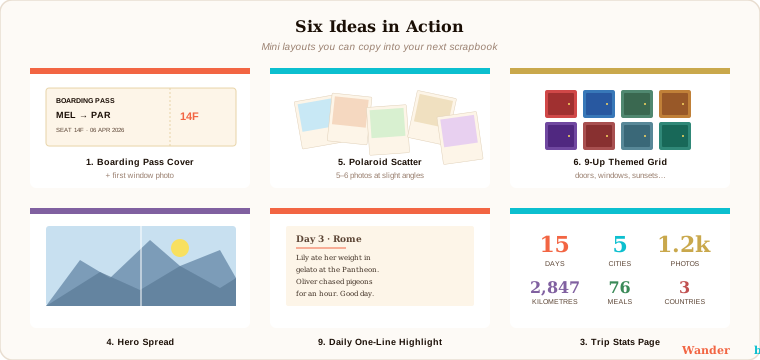
1. Use your boarding pass as a cover collage. Scan or photograph the boarding pass and pair it with the first picture you took from the plane window. It anchors the book in the exact moment the trip began.
2. Open with a hand-drawn route map. Trace your route across a stylised map of the country or region. Mark each city with a small star. It's a visual table of contents — you see the whole trip at a glance before you turn the first photo page.
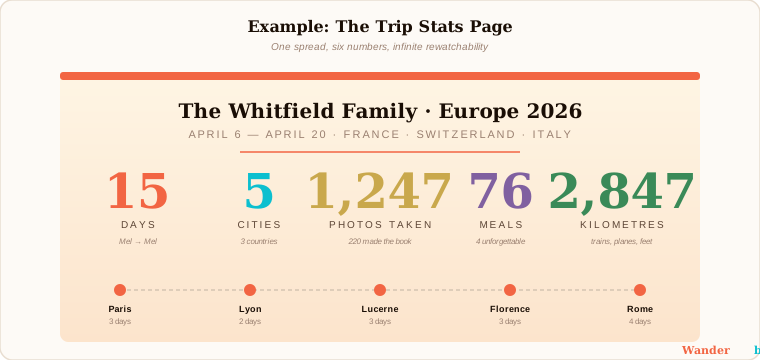
3. Build a "trip stats" page. A single spread with the trip's headline numbers: days travelled, kilometres covered, cities visited, photos taken, meals eaten, languages heard. Stats pages have outsized rewatchability — kids in particular love them.
Theme 2: Photo Layout Ideas
The way you arrange photos on the page changes how the book reads. These five layouts cover most situations.
4. The hero spread. One photo, blown up to fill both pages. Reserve this for the single best image of the entire trip — the one shot you would choose if you only had one. The dramatic scale is the point.
5. The polaroid scatter. Five or six photos arranged at slight angles, with white borders, like polaroids dropped onto the page. Adds movement and a handmade feel to spreads that otherwise feel rigid.
6. The nine-up grid of similar shots. Pick a theme — doors, windows, signs, sunsets — and arrange nine photos of that theme in a 3×3 grid. It turns a casual interest into a deliberate series.
7. Before-and-after spreads. Two photos of the same place at different times — sunrise versus sunset, before and after rain, the same square on different days. The contrast does the storytelling for you.
8. Black-and-white mood pages. Reserve one or two spreads for desaturated photos — rainy days, quiet moments, melancholy scenes. The shift in tone signals to the reader that something different is happening, and gives the whole book emotional range.
Theme 3: Journal & Writing Ideas
Words are what photos cannot carry. These five prompts cover the writing side of a great travel scrapbook.
9. Daily one-line highlights. One sentence per day, written that evening. "Day 3 — Oliver ate his weight in cherries at the market." Easy enough to actually do, specific enough to remember.
10. The "best meal" log. Each chapter gets a single best-meal entry with a photo and a two-line review. Food memories are the most reliable trigger of place memories — capture them deliberately.
11. Strangers' quotes. A page (or a sidebar in each chapter) for words from people you met along the way: the cab driver in Naples, the museum guard who pointed you to the secret room, the kid who told your kid a joke at the playground. Three lines each, no more.
12. The "what surprised me" page. One page reserved for the moments that genuinely caught you off guard. Not bucket-list items — actual surprises. These are the things that wouldn't be in any guidebook.
13. A letter to your future self. Write one short letter at the end of the trip — read it at the start of your next one. A loop you can keep going for years.
Theme 4: Mementoes & Ephemera Ideas
Travel produces piles of small physical things that get thrown out within a week of getting home. Digitising them is what separates a great scrapbook from a forgettable one.
14. Scan or photograph every ticket. Train tickets, museum entries, ferry stubs, gallery wristbands. They are tiny, they take five seconds to photograph, and they instantly transport you back. Bundle them into one spread per chapter.
15. Capture the local currency. Photograph the coins and notes from each country, plus a stamp or two from your passport. A small caption noting the exchange rate ages well — it is the kind of detail you will have completely forgotten by your next trip.
16. Pressed flowers and leaves. Even in a digital scrapbook, a photograph of a flower pressed in your notebook reads beautifully on the page. Mark which city it came from.
17. Business cards from places you loved. The little café, the bookshop with the perfect window, the bar you would return to. Photograph the cards and add them to that chapter — easier than keeping a stack of paper for a year.
18. A hand-drawn map overlay. Take a map of the city and draw your actual route over it in pen. Scan it. The line tells the story of how you really moved through a place, which is more interesting than the official tourist trail.
Theme 5: Creative Angle Ideas
These four ideas work for any trip and add personality without much effort.
19. The "foods of the trip" gallery. A single spread of food close-ups, captioned by city. Skip the restaurant logos and focus on the dish itself. Three rows of three works well.
20. Portrait series of people you met. With permission, take quick portraits of people along the way — the host, the guide, the busker, the shop owner. A wall of small portraits is one of the most personal pages you can make.
21. Doors, windows, or architectural details. Pick one architectural element and shoot it obsessively across the trip. The cumulative effect of fifteen Lisbon doors is more striking than any single one.
22. Sunrise versus sunset comparison. A two-page spread: every sunrise on the left, every sunset on the right, each captioned by location. Simple, repeatable, beautiful.
Theme 6: Collaborative Ideas for Couples & Families
The best travel scrapbooks are built by more than one person. These three ideas only work if you invite others to contribute.
23. Each person picks their "moment of the day." At dinner each evening, every traveller names their favourite moment of the day, and one of you logs it. By the end of the trip you have a chapter of personal highlights from every perspective.
24. Kids' drawings or maps. If you are travelling with children, ask them to draw something each day — a landmark, a meal, an animal. Scan or photograph the drawings and give them a dedicated chapter. These pages age better than almost anything else in the book.
25. A "thank you" page for the people who helped. The host who left wine in the fridge, the local who walked you to the train station, the friend who babysat the dog. A short page acknowledging them by name turns the book into something with gratitude built into it.
On tools that support contributor access — like Wanderbuk — every family member can add their own photos and captions directly, which makes ideas 23 and 24 dramatically easier. For more on how that works, see our collaborative photo book guide.
How to Choose Which Ideas to Use
You will not use all 25 ideas in one trip — and you should not try. Pick four or five that match the personality of the trip you took, and treat the rest as a menu to dip into for future books.
A few rules of thumb:
- Short trip (3–7 days): Pick 4–6 ideas — one from each theme works well.
- Long trip (10+ days): Pick 8–10 — variety keeps the book from feeling repetitive across many chapters.
- Family trip: Always include the collaborative ideas (23, 24, 25) and at least one journal prompt.
- Solo trip: Lean into the journal prompts (10, 11, 12, 13) — solo travel rewards reflection more than any other kind.
For the broader framework of how to build a scrapbook from scratch, our guides to what a digital scrapbook is and building a travel photo album cover the structure. For a real-world example of how a family used several of these ideas across a 15-day Europe trip, the Whitfield family story walks through the finished book end to end.
Final Thoughts
The difference between a forgotten camera roll and a treasured travel scrapbook is rarely talent or design skill — it is having a few specific ideas you actually use. Pick five from this list before your next trip. Write them on a small piece of paper. Stick it in your wallet. The book almost builds itself from there.
If you want a fast way to assemble your ideas into a finished book, you can start a free digital travel scrapbook on Wanderbuk and invite anyone you travelled with to contribute their photos and captions before the trip fades.
Related reading: What Is a Digital Scrapbook? — Travel Photo Album Guide — Best Online Scrapbook Makers — Collaborative Photo Book Guide — Family Europe Trip Scrapbook Story — History of Scrapbooking